
Jetpack Joyride Racing
Halfbrick StudiosRacing
3.425.00 Reviews
- Version
- 1.2.1
- Installs
- 100.00K
- Age Rating
- Everyone
Screenshots

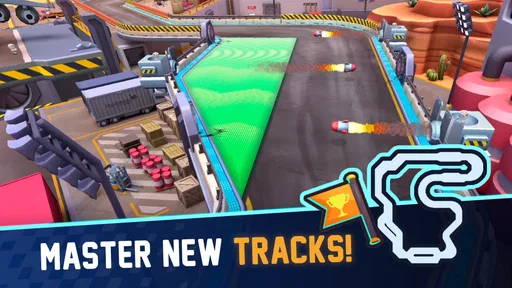


Our Review of Jetpack Joyride Racing
 Analysis by Appyee
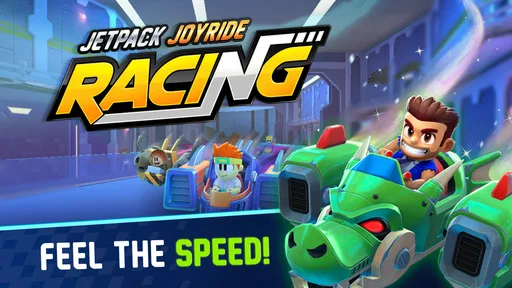
Jetpack Joyride Racing takes the familiar energy of Halfbrick Studios and points it toward quick rally competition. I found the central appeal easy to understand: build speed, manage drifts, and use collected cards to make each race feel more strategic than a simple tap-and-hold challenge. It is a free racing game for Android, aimed at Everyone, and it works best as a short-session game rather than a serious simulation.
My overall impression is positive but measured. The game has a playful identity and a useful pick-up-and-play structure, yet the modest average rating of 3.4 from around 600 ratings suggests that its appeal is not universal. I can see why some players would enjoy repeating races to improve their control and card choices, while others may find the progression or purchase prompts less comfortable than in a completely straightforward arcade racer.
How the racing experience feels in everyday play
The first thing I noticed is that this is not trying to reproduce the weight and complexity of a console rally simulator. Its focus is immediate movement. You are there to accelerate, steer through turns, drift when the road allows it, and make decisions quickly enough to keep a race from slipping away. That makes it a natural fit for a short break, especially when I want something more active than a passive puzzle but do not have time for a long event.
The racing format also gives the game a different rhythm from the original side-scrolling identity associated with Jetpack Joyride. Here, the important question is not simply whether I can react to an obstacle. I also need to think about the line I take into a corner and whether a drift helps me maintain momentum or leaves me badly positioned for what follows. That small change gives the races a more deliberate feel than the name alone might suggest.
Drifting is the mechanic I would spend the most time practicing. A beginner can approach corners cautiously, but that usually means giving away speed. A more confident player can use a controlled slide to carry momentum through the bend. The trade-off is clear: aggressive driving can produce a faster run, but a poorly timed drift may cost more time than it saves. I like that the game rewards learning the road instead of treating every race as a pure reflex test.
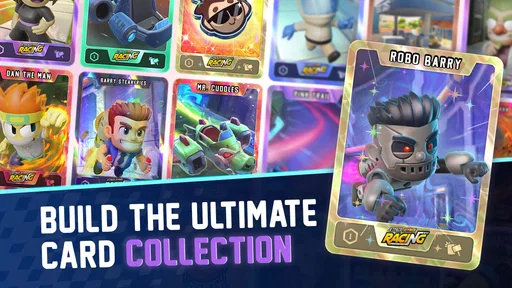
The card system adds another layer. Collecting cards gives me a reason to return after I already understand the basic controls. Rather than treating every attempt as an isolated race, I can think about how my collection affects the way I approach future events. This is one of the more useful design choices because it gives repeated play a purpose, although players who prefer a purely skill-based racer may feel that card progression complicates the competition.
One practical tip is to avoid changing everything at once when experimenting with cards. I would first pay attention to how a single change affects the way a race feels, then adjust my driving around it. If I change several things together, it becomes difficult to tell whether an improved result came from better cornering, a different card choice, or simply a more favorable run. That kind of small self-testing makes the collection system feel more meaningful.
Another helpful habit is to treat the first attempts on a route as practice rather than as failures. I use them to identify where I can safely carry speed and where a conservative entry is smarter. In a game built around drifting, the fastest-looking move is not always the fastest complete run. A clean exit from a corner often matters more than a dramatic slide that begins well but leaves the vehicle pointed in the wrong direction.
Why the Halfbrick style works here
Halfbrick Studios is a strong match for this kind of accessible arcade racing. The developer is known for games that communicate their basic idea quickly, and this title benefits from that same directness. I do not need to study a complicated manual before I can understand what the race wants from me. The combination of speed, drifting, and cards is easy to explain, but it still leaves room for personal improvement.
The connection to Jetpack Joyride also gives the game a recognizable tone, even though the racing format asks me to play differently. It feels designed for players who enjoy a bright, energetic game loop and want progress in compact bursts. The result is less intimidating than a realistic rally game, but it is more involved than a basic endless driving app where the only goal is to survive as long as possible.
I especially appreciate the way the game can serve two kinds of players at once. Someone new to racing can focus on finishing events and learning control, while a more experienced player can chase cleaner lines and better use of cards. That flexibility is important on mobile, where people often install a game without knowing whether they want a casual diversion or something they can keep improving at.
The main weakness is not the driving
The biggest limitation, in my view, is the tension between accessible racing and progression built around collectible cards. The card layer can make repeated play more interesting, but it can also make results feel less purely connected to driving skill. If I lose a race, I may wonder whether I chose the wrong approach, used the wrong card combination, or simply need more progression. That uncertainty can weaken the satisfaction of mastering a corner.
The free-to-play structure deserves attention as well. The game costs nothing to start, but individual in-app purchases range from $2.99 to $29.99. That does not automatically make the experience unfair, yet it means I would approach the game with realistic expectations. Anyone who dislikes spending prompts, collectible progression, or the feeling that optional purchases may influence the pace of advancement should think carefully before committing to it.
For me, the best way to handle that friction is to decide in advance whether I am willing to play at a relaxed pace without paying. If the answer is yes, the free entry point is useful: I can learn the controls and see whether the racing loop holds my attention before spending anything. If I know I want a completely purchase-free experience, a premium racing game may be a better choice even if its initial cost is higher.
The rating of 3.4 is worth reading as a warning rather than a verdict. It is not proof that the game is poor, but it does suggest that some players have encountered enough friction to lower their opinion. My own reading is that the title will divide people according to what they expect from mobile racing. Players seeking quick arcade action may accept the card system, while players looking for a clean, competitive driving test may be less forgiving.
Who should install it?
I would recommend it first to fans of Halfbrick Studios who want to see a familiar style applied to racing. It is also a good candidate for people who enjoy short sessions, gradual improvement, and games where a small collection system gives them a reason to replay earlier content. The Everyone age rating makes it suitable for a broad audience, although adults should still keep the purchase structure in mind when sharing a device.
It is particularly well suited to an everyday scenario like a commute break, a wait at an appointment, or a few minutes before bed. I can imagine playing several races, noticing one corner where I consistently lose momentum, and then stopping with a clear goal for the next session. That is more satisfying than a game whose short sessions feel disposable because nothing carries forward.
It may also suit a player who enjoys comparing two approaches rather than simply rushing to the finish. I might take a safer line in one attempt, then try a wider drift in the next and judge the result by how cleanly I exit the turn. The card system gives that experimentation an additional angle, because I can test whether a change in setup supports a cautious or aggressive style.
I would skip it if I want realistic vehicle handling, detailed tuning, or the feeling of a traditional rally championship. This is not the right substitute for a simulation-focused racer. I would also recommend looking elsewhere if collectible cards are a deal-breaker or if I find any form of optional purchase pressure distracting. A simpler arcade racer with no progression layer would probably be more comfortable in that case.
Practical details before downloading
The game is free to download, which makes trying it relatively easy. It supports Android 8.0 and later, so compatibility is something I would check before installing on an older phone or tablet. The current version is 1.2.1, and the title has passed 100 thousand installs, giving it a real player base without making it feel like a massive mainstream racing platform.
Those install numbers also help put the experience in perspective. This is an established mobile release with enough visibility to attract players, but the rating indicates that popularity alone should not decide whether it belongs on my device. I would use the first sessions as a test: do the controls feel precise on my screen, do I enjoy repeating races, and does the card layer add motivation rather than annoyance?
One question many players will have is whether the game works for very short sessions. In my experience, that is one of its better qualities. The racing concept is easy to enter without a long warm-up, and the focus on individual events makes it suitable when I only have a little time. The deeper value comes from returning later and applying what I learned, not from playing for hours in one sitting.
Another question is whether a newcomer needs racing experience. I do not think so. The basic goals are approachable, and learning to drift can happen gradually. The important distinction is between understanding the controls and mastering them. A new player can begin by prioritizing clean turns, then become more ambitious once the routes and timing feel familiar.
Players may also wonder whether cards replace skill. I would not describe them that way, but they do affect how the game feels. Good driving still matters, especially when a corner demands precise timing, yet the collection layer means two attempts may not feel identical in terms of preparation. That is a strength for players who enjoy progression and a weakness for anyone who wants every result to come directly from steering.
The final practical question is whether in-app purchases are necessary. I would not assume that spending is required simply to try the game, because it is free to start. However, the available items can influence how comfortable the long-term experience feels for different players. I would play without paying first, set a personal limit, and only consider a purchase if the racing itself remains enjoyable after the initial novelty has faded.
How it compares with other mobile racers
Compared with realistic racing games, this title is lighter, faster to understand, and less interested in technical vehicle detail. That makes it friendlier for casual play, but it also means I should not expect the same depth of handling or customization. The reward is immediacy: I can focus on the next turn instead of managing a long list of simulation settings.
Compared with endless runners, it offers a stronger sense of route-based improvement. In an endless format, the goal often becomes surviving longer or reacting to whatever appears next. Here, drifting and race outcomes give me more reason to study my mistakes. The card system further separates it from a pure reflex game by giving repeated attempts a progression component.
Against a premium arcade racer, the comparison becomes less comfortable. A paid game may provide a cleaner structure and fewer concerns about optional purchases, while this free title lowers the barrier to entry. The right choice depends on what I value more: immediate access and collectible progression, or a more contained experience with fewer monetization considerations.
My strongest recommendation is to judge it by the quality of its driving loop, not by the promise of endless content. If I enjoy the feeling of improving a drift and making a better line through a familiar corner, the game has a solid reason to stay installed. If I only care about unlocking the next card or reaching a higher progression point, the races may eventually feel like a means to an end.
My verdict after weighing the trade-offs
Jetpack Joyride Racing succeeds when it keeps the focus on quick, energetic rally play. The combination of speed, drifting, and cards gives it a recognizable personality, and Halfbrick Studios has shaped that combination into something approachable for mobile players. I like that it can turn a few spare minutes into a small improvement project rather than demanding a long commitment.
Still, I would not recommend it blindly. The card progression and in-app purchase range create a layer of friction that will matter to players who want a pure test of driving ability. The average rating also encourages a cautious trial instead of an automatic recommendation. For me, the game is worth trying because the free entry point lets the controls prove their value before I make any commitment.
My final advice is simple: install it for the arcade drifting, stay for the replayable races, and keep your expectations realistic about the card-driven progression. It is a good fit for casual racers and Halfbrick fans who enjoy experimenting, learning corners, and playing in compact sessions. It is not the best choice for simulation enthusiasts, purchase-averse players, or anyone seeking a completely stripped-down racing experience.
As a free racing game for Everyone on compatible Android devices, it occupies a useful middle ground. It has more structure than a disposable time-killer, but less seriousness than a dedicated racing simulator. If that balance matches what I want from a mobile game, I can see myself returning for another attempt at a difficult turn. If not, I would choose a simpler arcade racer or a premium alternative and avoid the compromises that come with this particular design.
Verdict
Strengths of Jetpack Joyride Racing
- Fast, pick-up-and-play races that work well for short sessions.
- Bright cartoon visuals and smooth animations make the game appealing.
- A wide range of vehicles adds variety to the racing experience.
- Simple controls are easy for younger players and casual gamers.
- Unlockable upgrades provide a satisfying sense of progression.
Limitations of Jetpack Joyride Racing
- Frequent obstacles can make later races feel frustrating rather than skill-based.
- Progress may feel slow without spending coins or replaying earlier levels.
- Some vehicles and upgrades require considerable grinding to unlock.
- The busy screen can make hazards difficult to spot during fast races.
- Ads and optional purchases may interrupt the otherwise quick gameplay.
Other Releases by Halfbrick Studios
View All
Fruit Ninja®
Arcade4.4

Jetpack Joyride
Arcade4.4

Dan the Man: Action Platformer
Arcade4.7

Fruit Ninja Classic
Arcade3.3
Similar Picks in This Category
View All
Hill Climb Racing
Fingersoft4.3

Dr. Driving
SUD Inc.4.2

Traffic Rider
skgames4.5

Asphalt 8 - Car Racing Game
Gameloft SE4.6

Race Master 3D: Car Racing
Beresnev Games4.6

Extreme Car Driving Simulator
AxesInMotion Racing4.3
Frequently Asked Questions
What is Jetpack Joyride Racing?
Jetpack Joyride Racing is an action-focused racing game that combines fast side-scrolling movement with jetpack-powered driving challenges. Instead of relying only on traditional vehicles, you guide a character through tracks filled with obstacles, ramps, hazards, and collectibles. The appeal comes from reacting quickly, maintaining momentum, and trying to finish races more efficiently while gradually improving your performance and unlocking additional content.
How does the gameplay work in Jetpack Joyride Racing?
The gameplay is designed to be easy to understand but increasingly demanding as the tracks become more complicated. You control your racer, use the jetpack or vehicle abilities to navigate uneven terrain, avoid obstacles, and collect useful items. Timing is important because accelerating too aggressively can lead to crashes, while cautious movement may leave you behind. Short races make it suitable for quick gaming sessions.
Is Jetpack Joyride Racing free to download and play?
Jetpack Joyride Racing is generally presented as a free-to-play mobile game, allowing users to download it without an upfront purchase. However, free access may be supported by advertisements and optional in-app purchases. These purchases can sometimes provide cosmetic items, upgrades, or other conveniences. Before downloading, it is worth checking the store listing for the current pricing, advertising policy, and available purchase options.
Does Jetpack Joyride Racing require an internet connection?
The basic racing experience may be playable without a permanent internet connection, which is convenient when traveling or using limited mobile data. Nevertheless, some features can depend on online access, including advertisements, leaderboards, cloud-related functions, updates, events, or in-app purchases. Availability may also vary by version and device, so users should not assume that every feature will work offline.
Is Jetpack Joyride Racing suitable for children and casual players?
Jetpack Joyride Racing is approachable for casual players because its controls and objective can be learned quickly, while the obstacle-filled tracks provide enough challenge to keep repeated attempts interesting. The game is generally colorful and cartoon-like rather than realistic or violent. Parents should still review the age rating, advertising, in-app purchase settings, and privacy information before allowing younger children to play.
Play our best games!


